The night life in Prague is different than what I am used to. While Austin has a great and popular going out scene, we definitely aren’t big on clubbing. Here however, the clubs are very popular.
Before coming to Prague, I had heard many stories of friends that after a night out on the town, had come home as the sun was rising. I couldn’t imagine how anyone could physically do that, and honestly I still can’t. In Austin, most bars close at 2 or 3 a.m. latest. Here, clubs can be open until 6 a.m.
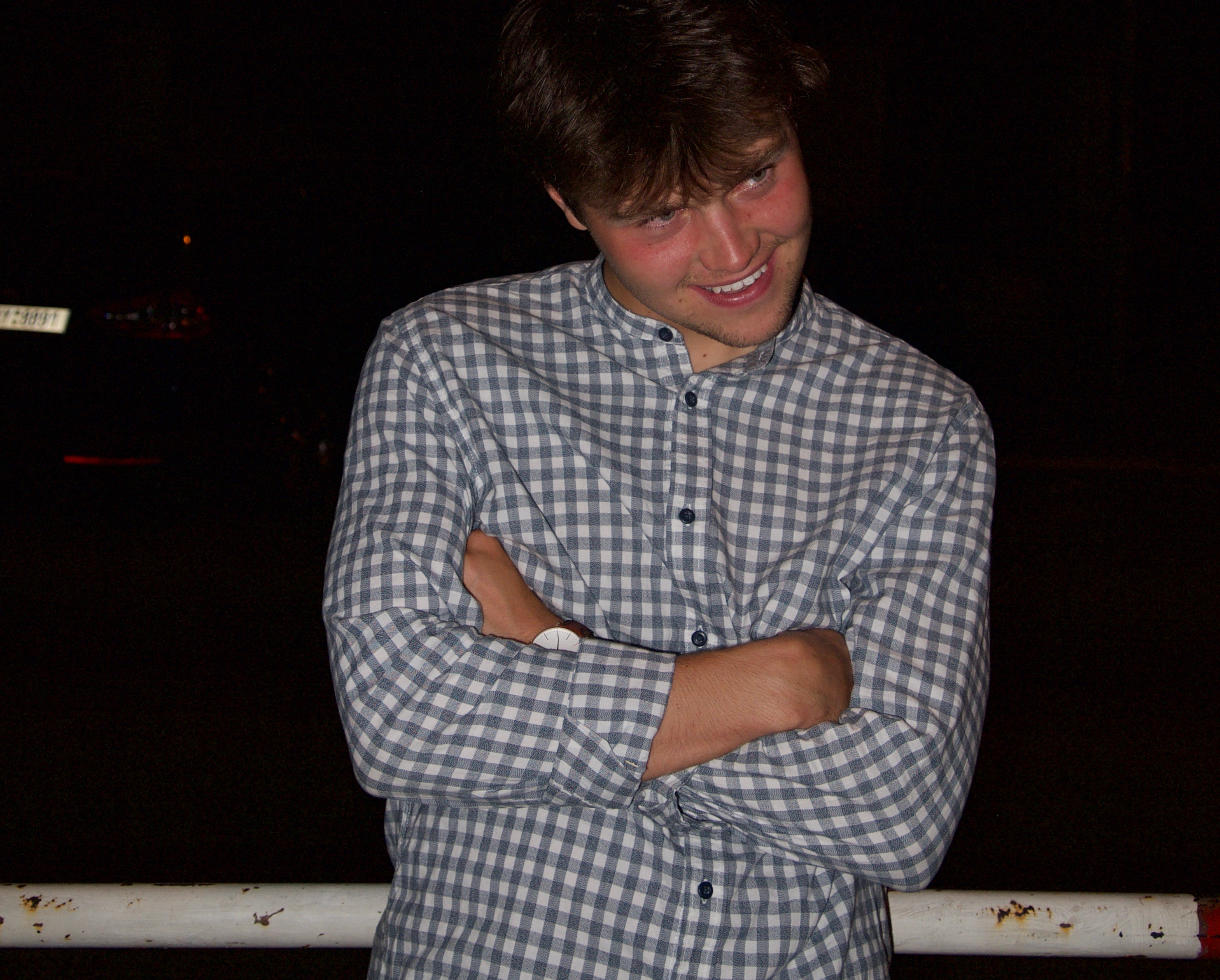
This photo was taken at a bar around 2 a.m. (very late for me). As I was talking to the bartender, he mentioned how exhausted he was, referring to a long night the day before. I asked him the toll that his job takes on his health. He responded that he sleeps anytime he can, and often times late into the afternoon. I can’t imagine a life staying out that late every night, but it is common amongst young people here in Prague. I hope he is able to get some sleep in the future. I definitely need some.
As my time in Prague is drawing to an end, I can’t help but begin to reflect on my last month. I think about all the new things I’ve learned, all the new places I’ve seen, and all the people I’ve had the opportunity to meet. It’s reassuring to think that if I am lucky enough to come back to this magical city, I will get to experience many of my favorite things again.
However, one of the hardest parts about leaving is knowing that many of the people we have met, we will probably never see again. I will definitely miss “Mama T” our awesome, kick a** CET instructor who never fails to make us laugh. I will miss my favorite baristas at Head Shot Coffee, and Café tout va bien, who always remember my order. I will miss Honza, Jakub, and Kuba from the hole-in-the-wall restaurant below our flat. I will miss our friends at the farmers market who make the BEST quesadillas.
This is a picture of my first Czech friend who Teresa introduced us to. It was fun to meet someone from Prague that is our age. Martin is also passionate about photography so he gave us some tips on good places to shoot as well recommendations of what to do around Prague!
The transportation systems around Europe are fantastic in my opinion. It is easy and affordable for anyone to go nearly anywhere. In Prague, one can travel locally, taking the metro around town. If they want to travel to another city in the Czech Republic, they could bus or take the train for a decent price. International travel is also convenient. One can travel almost anywhere in Europe, via bus, train, or airplane depending on where they want to go. It’s a great infrastructure.
This past weekend some of my classmates and I tried something for the first time; traveling via overnight bus. We boarded the bus at night, and woke up the next morning in Switzerland. At first, I was a little skeptical about this option as I was afraid I would be totally exhausted. However, bussing was much more cost effective than flying, so we decided to give it a shot. It was quite an interesting experience. I was able to get some sleep and get from point A to point B, but definitely didn’t get the best rest of my life 😉
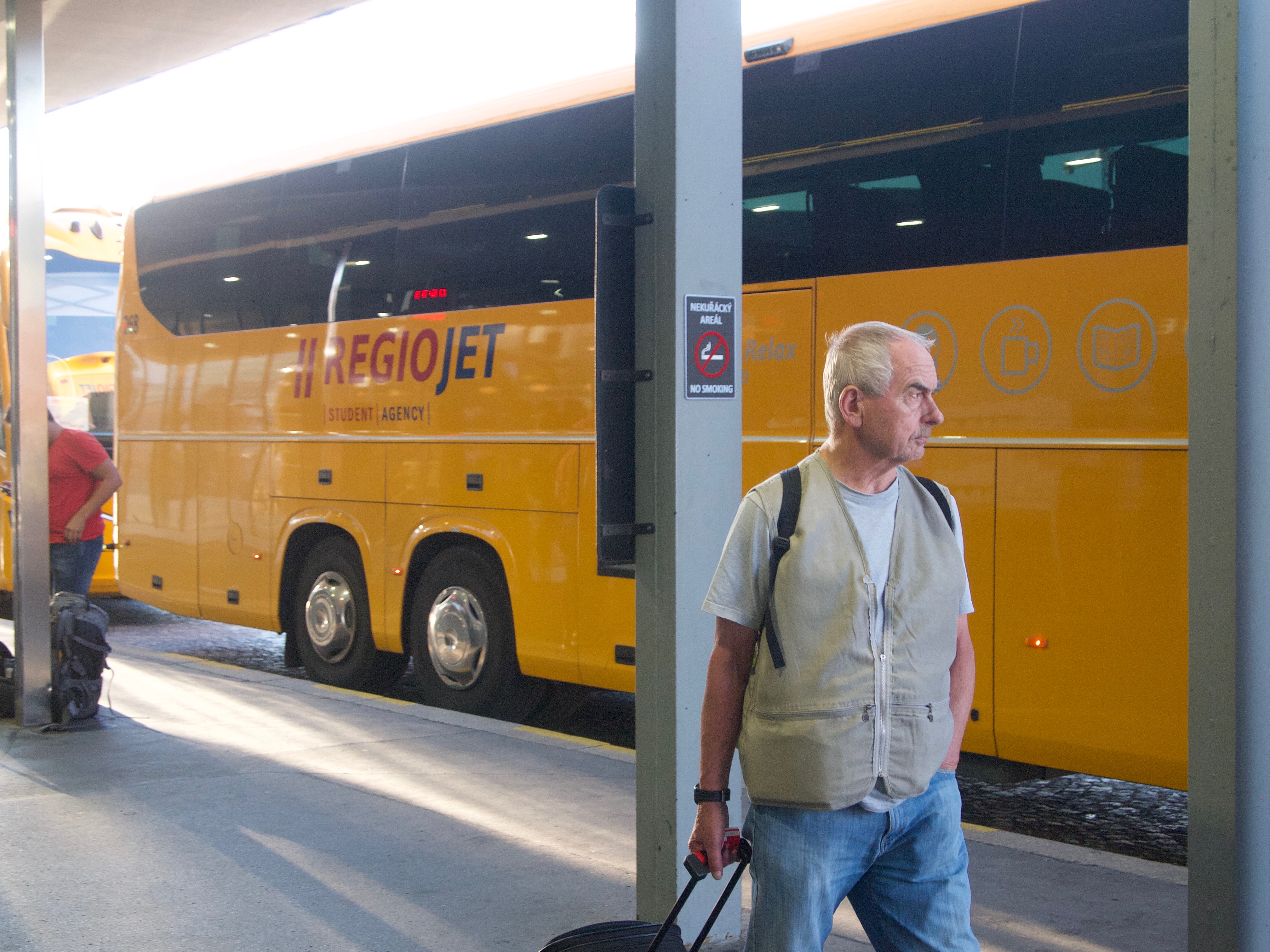
This photo was taken at the bus stop in Prague at around six in the morning. This particular man seemed to have woken up on the wrong side of the bed… or seat. He was understandably a bit grumpy, which can be seen in his intense facial expression. I also liked how the bright morning sun can be seen shining behind the bus. It’s rather blinding.
This photo was taken near Old Town Square. As I was running to catch the metro one evening I slowed my pace as I noticed this adorable family. The little girl held both of her parents hands as they occasionally lifted her up to swing her. She laughed endlessly. It reminded me of fond memories with my own parents, as we used to do the same thing when I was her age.
As the trip is nearing the end, I have mixed emotions about going home. Back to reality. School… work… routines… It makes me a little sad to know that my days exploring the nooks and crannies of Prague are almost over. And soon enough I will be back in the heat of Austin, sitting in MoPac traffic.
However, one of the things that makes me excited about going home is seeing my family again. In fact, this is probably the longest I have ever gone without seeing them, as I grew up in Austin.
I liked this particular photograph because it reminds me that although I am sad to go back home, I will be so, so happy to be with my family. When you’re with people you love, it doesn’t matter what you’re doing or where you’re going. The family in this photo represents exactly that. Sometimes the best days are spent just taking a stroll.
This photo was taken in Kutná Hora after our tour of the silver mines. I was proud of myself for exploring the mines, as it was often times very claustrophobic. There were points where we had to completely kneel and even travel through rock passageways only 40 centimeters wide. Along our journey, which lasted about 30 minutes, we stopped at a ‘lovers wishing well’. This was a small grotto filled with clear water in the cave. It is supposed to bring love to ones life. Kind of a funny place for romance. Before we headed out, our guide turned off all the lights and we were left in complete darkness for a few minutes – it was very eery.
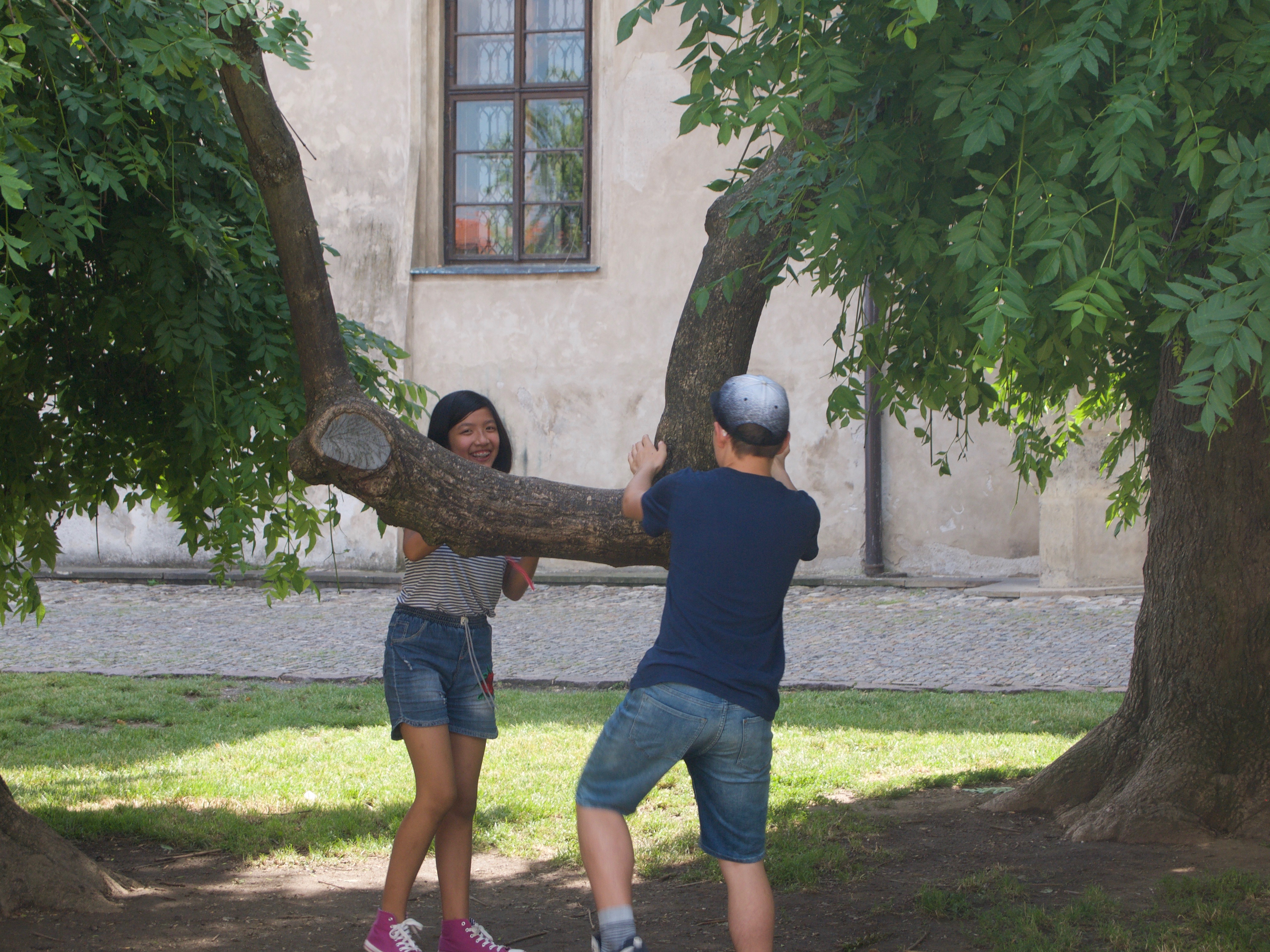
As you can probably imagine, emerging from the cold, dark, isolated mine to the sunny bustling town of Kutná Hora was refreshing. Directly outside of the mine museum was this small group of children playing and swinging from the trees. This particular boy and girl seemed to be very fond of each other as they played tag, chatted, and giggled.
The way the kids played together in the afternoon breeze was a stark contrast to the baron, rock mines directly below them. I liked this picture because they children were so happy together. Perhaps they should go visit the ‘lovers wishing well’ down below.
The metro has been the best place for people watching. Here one can find people from all walks of life. Locals, tourists, toddlers, school children, businessmen and women, and even pets can be found on the metro. Sometimes it can be really fun to people watch on the metro as it gives you something to do as you wait for your stop.
There are two main rules that must be followed when using the metro. #1.) There is seniority when it comes to sitting in a seat. You are expected to give up your seat for injured/disabled people, pregnant women and basically anyone older than you. You will be fiercely glared at if you do not and probably confronted. This rule is based out of respect more than anything else. And #2.) When taking the escalator to and from the metro, stand on the right side if you aren’t walking. The left lane is strictly for those passing you. If you do not follow this rule you will probably be shoved out of the way and also confronted 🙂
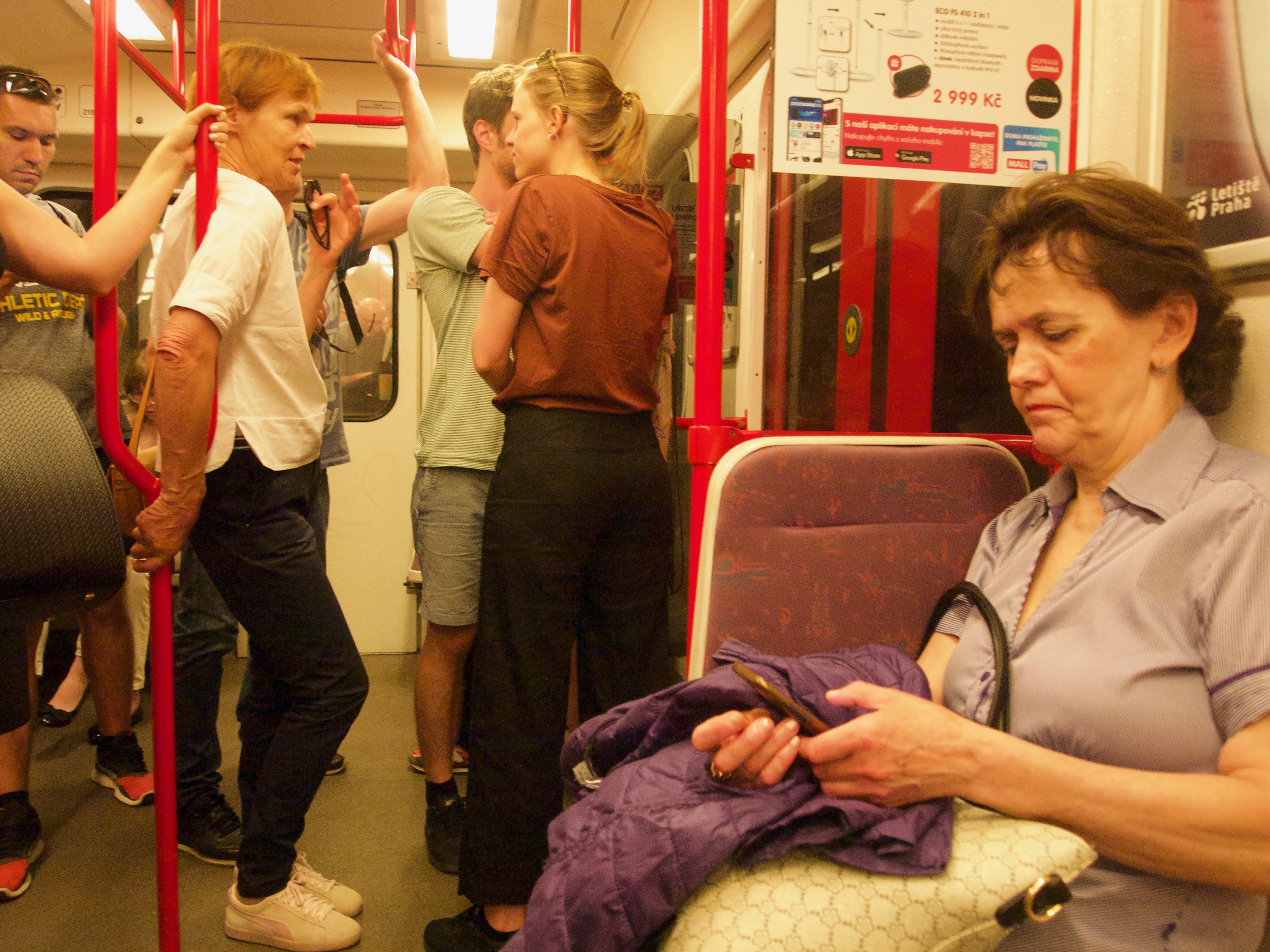
I liked this photo because its up close and personal. It captures average people doing an average, everyday task. Nothing too exciting I will admit. But, the proximity of the photo allows the viewer to get a detailed look at the subjects, something they probably couldn’t do in real life, as staring is considered impolite. For example, the woman’s bright purple jacket stands out against the mostly red colors of the metro. The viewers can see the veins in her hand and wrinkles on her skin. As Professor Darling mentioned in one of our first lessons, photography allows you to look at something for much longer than you normally would. It gives you the opportunity to notice things you otherwise wouldn’t.
Today we visited the beautiful town of Kutná Hora, famous for its successful silver mines. Kutná is also well known for one of its rather unique Churches; the bone Church, or Sedlec Ossuary. The chapel is estimated to hold the bones of about 40 to 70 thousand people. And yes, the bones are all real.
In 1278, Henry the abbott of the Cistercian monastery in Sedlec, travelled to the Holy Land. He returned to Kutná Hora with a small amount of earth and sprinkled it at the cemetery. As a result, word travelled and many people across the region wanted to be buried there, close to the holy ground.
In the early 1500’s some of the bones began being exhumed and later began being used to decorate the inside of the Church. The center chandelier is said to have every bone in the human body.
The bone Church was undoubtedly one of the craziest, most unique structures I have ever seen. I kept having to remind myself that the bones I was staring at were real, and once belonged to a human being. I have never seen anything remotely like it.
Not only was the bone Church fascinating to learn about and see, but the people there were also very intriguing. They were obsessed with taking pictures with the bones. It was funny to watch people pose next to the skulls with their selfie sticks.
I liked this particular picture because the women poses so casually next to the pile of skulls behind her. Her careless smirk appears lively next to the baron skulls. It is quite the contrast.
Today we toured Prague’s “modern architecture”. Before heading out on this tour, I imagined we would be looking at the Franz Kafka sculpture or the TV tower – something designed within the last 50 years. I couldn’t help but giggle to myself as I shortly learned that “modern” here pertains to the late 19th and early 20th centuries. A time period that would be considered rather old in the United States.
The tour focused mostly on a design style called “Art Nouveau”. It is an international style that is much more curved, and features many aspects from nature such as flowers and plants. It also very metaphorical. Our guide noted that this time period was exciting and fresh with innovation, which reflects this unique and upbeat style.
This photograph was taken at the Museum of Decorative Arts. It has a beautiful facade that completely embodies the Art Nouveau style. It was extremely colorful and optimistic looking, especially compared to the often dramatic Gothic and Baroque styles, more commonly seen in Prague.
I liked this photo because it really makes the eye work. In the background of the photo, the horizontal colorful lines of the building can be seen. In the foreground, the viewers eye is drawn to the vertical line of the man.
During the second World War, the town of Terezín (located just an hour outside of Prague) was transformed into a Jewish Ghetto. Here, the Nazi’s could control Jews before sending them to concentration camps like Auschwitz. The living conditions in Tereźin were unimaginable, which is terrifying considering this was one of the “better” places to be. One barrack we visited held 600 prisoners, each crammed on community beds with only a few toilets per room. Feces would often pile up on the floors. In the summer, the heat was nearly unbearable, causing the rooms to become steamy. In the winter, thin mattresses would freeze. Disease, death and hunger ran rampant.
Before visiting this terrible place, we were given the opportunity to speak with a survivor from Terezín, Doris Schimmerlingovf. Doris’s family was sent to Terezín when she was about 16. Although Doris did not consider herself religious at all, she was still considered to be of Jewish heritage because of her mother.
After their arrival, the family was separated and her father was sent to Auschwitz where he was murdered. Her mother died from disease. Doris spent four birthdays in Terezín. Only after the war was over did she realize her brother had also somehow survived. She considers herself very lucky to be alive as those who were sent to concentration camps were often selected randomly. She has spent her life traveling and speaking about her experiences, so that others can learn accurately.
This photograph was taken at the Terezín museum. I found it to be interesting because the young man pictured seems to be reading about someone his own age, who even looks similar to himself. It’s so disturbing to me that the victims of the Holocaust were completely innocent, and often times randomly chosen. They didn’t do anything to deserve their tragic fate. It was completely unjust. Perhaps, had he been alive 70 years earlier, that could have been him in the photo. It was such a humbling and moving experience. I felt so thankful to live the life I do today.
It reminded me of a quote I remembered from the Anne Frank House:
Czechs certainly have an appreciation for art, in all its forms. Whether it be graffiti, sculpture, music, theatre, photography, or painting – art seems to be embraced and encouraged. Just walking down the street, one can see just how deeply embedded it is into culture and everyday life.
Today we toured the National Gallery in Prague. It is no
secret that I am very new to photography and sometimes these daily posts can
feel overwhelming – trying to capture something from a unique perspective or finding
the words to describe how it makes you feel.
As I explored the gallery today I came across a quote from Czech
photographer Jan Dobrovský, that
really resonated with me:
“I can most likely bring nothing new as far as this direction is concerned… Photography frees me from the pressure that settles on my soul… What can I say about this? I press the shutter release and hope that the emotion, which I myself cannot even name, can be sensed from my photos.”
I loved this quote because it acknowledges that every photo
does not need to be ground breaking or something that has never been done before.
It acknowledges that you don’t fully have to understand it.
This photo stands out to me because I liked how the sculpture contrasts with the man. They appear to be almost “yin and yang” with each other. Where the sculpture concaves, the man’s head fills the empty space. Where the sculpture protrudes, his body rounds near the neck. They nearly fit together like a puzzle piece. I think this is representative of the Czechs deep connection and relationship with art. Always walking hand-in-hand.




 People of Prague